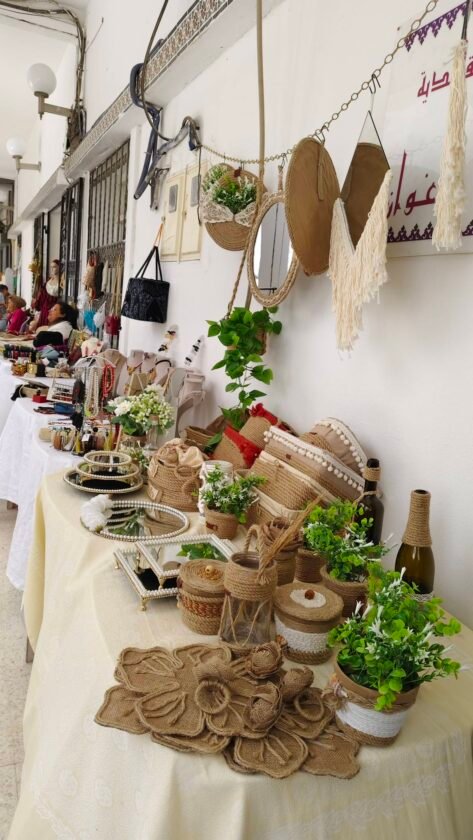
After an unexplained three-year absence, the Zaghouan traditional handicrafts fair has made its comeback, running from May 7 to 10 with the participation of nearly 50 artisans from Zaghouan and other governorates.
National Fair at Temple of Waters Starting in 2027
Held at the premises of the regional handicrafts delegate’s office in parallel with the 40th edition of the Nesri flower festival, the fair coincides with the harvest season of the fragrant Nesri flower (known as dog rose or wild rose in English)—typically used for distillation and making traditional Nesri cakes. Organizers are now looking to further enhance the value of this regional specialty by upgrading the local economic event to a national level. By 2027, it is set to become a 10-day national fair hosted at the historic Temple of Waters archaeological site.
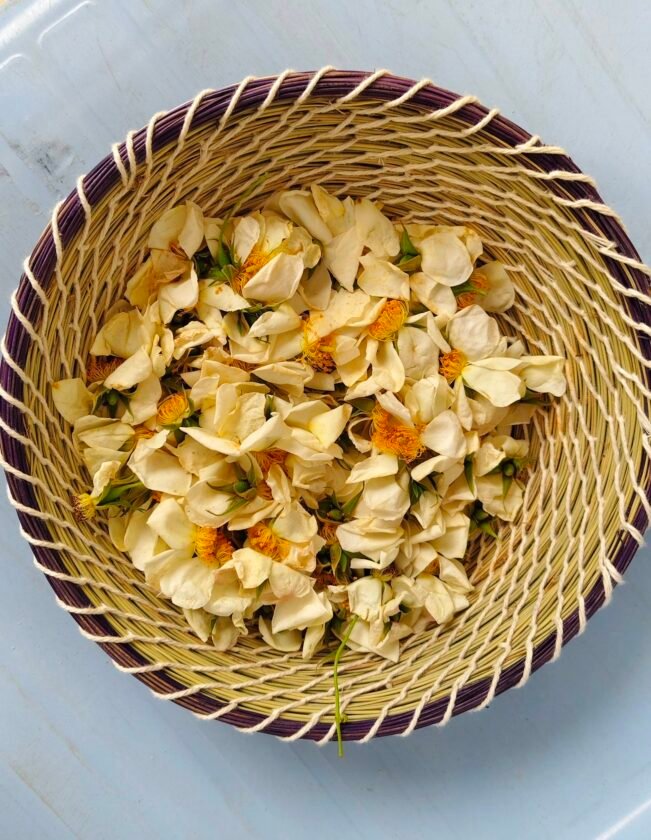
Participating specialties include the distillation of herbs and flowers that abound in the Zaghouan region — known for its forests and fields rich in various aromatic herbs and flowers, foremost among them the Nesri flower — alongside basket weaving, bamboo work, plant fibers, leather and footwear, cane crafts, and hand embroidery.
The fair is also drawing a surge of exploratory tourist trips and Tunisian visitors purchasing Nesri flower water and leaf cakes, injecting significant tourism, economic, and commercial activity into the region — as witnessed during a visit to the city today.
Boutheina Louz, regional handicrafts delegate for Zaghouan, explained that the upcoming national fair will feature live workshops and awareness days, along with broader participation from artisans across the country. This, she said, will help promote local handicrafts and create a space for exchanging expertise and experiences among artisans.
She noted that the Nesri flower, a cultural and economic hallmark of the region, is long overdue for greater valorization and marketing. “Today it is no longer used solely for distillation but has been incorporated into perfumery and cosmetics, as well as in various pastries and dishes,” she said. “This calls for making this product a brand that meets international standards.”
3,400 Artisans in Zaghouan Need Marketing Support
Louz highlighted that Zaghouan is home to 3,400 artisans, 70% of whom work in Nesri distillation and leaf cake production. The National Handicrafts Office, through the regional delegation, is working to bring them into the quality assurance fold and bolster their marketing and promotional capabilities via an upgrading program targeting young people in particular, aiming to train a new generation capable of keeping pace with modern demands and technologies.
According to local investor and agricultural expert Nejib Darwich, this year’s Nesri flower harvest is estimated at 7.5 tons, compared to an annual average of 6 tons.
The price per kilogram of Nesri flowers ranges between 20 and 30 dinars, depending on quality. Harvesting is particularly labor-intensive, as the flowers must be picked before sunrise — ideally at dawn — before the petals open and the fragrance dissipates. For this reason, it has earned the nickname “the shy flower.”
Producing one liter of distilled Nesri flower water requires approximately 1.5 kilograms of flowers—explaining its higher price compared to other distilled floral waters. This is in addition to its health benefits for the arteries of the heart, the stomach, and joint pain.
TunisianMonitorNews (Tlig Dhouha)