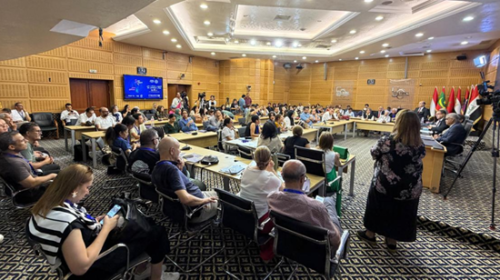
Tunisia’s economy has settled into a path of slow growth, exposed to rising import prices and imbalances in public finances, with severe water scarcity now emerging as a central risk to its economic future, according to the World Bank’s latest Tunisia Economic Monitor.
The report, titled “Tunisia’s Water Challenge: From Scarcity to Resilience,” says how the country manages its limited water resources will be one of the key determinants of its economic prospects.
Growth slows as unemployment persists
Tunisia’s economy grew 2.7 percent in 2025 and 2.4 percent year-on-year in the first half of 2026, driven by recoveries in agriculture, mechanical and electrical industries, and tourism. But growth is projected to ease to 2.3 percent in 2026 and average 2.1 percent over 2027–2028.
Unemployment declined to 14.9 percent in the second quarter of 2026. However, women continue to face significantly weaker labor market outcomes, with female unemployment standing at 21.6 percent — nearly twice the rate for men.
Water scarcity: just 380 cubic meters per person
The report’s special chapter highlights water security as an increasingly important driver for economic growth and job creation. Tunisia currently has about 380 cubic meters of renewable freshwater available per person each year, well below the international threshold for absolute water scarcity.
Climate change and growing demand are expected to intensify pressure on already limited resources.
Inaction could cut GDP by 6.4 percent by 2050
The economic costs of inaction would be substantial. The World Bank estimates that water scarcity could reduce Tunisia’s GDP by 6.4 percent by 2050.
Agriculture — which employs 14 percent of the national workforce and up to half of rural workers — is particularly vulnerable. Without action, water and climate stress could eliminate at least 30 percent of agricultural jobs by mid-century and significantly reduce agricultural output.
The consequences would extend well beyond farms, affecting tourism, agro-processing, industry and other water-dependent sectors.
Water security can create jobs, not just risks
Yet water security is not only about mitigating risks. It is also an opportunity to create jobs and strengthen economic resilience.
The World Bank Group-supported RESEau program, a major initiative to strengthen the resilience of Tunisia’s water sector, is expected to generate around 4,000 permanent jobs and 13,400 temporary jobs during its first phase alone.
“Water security is fundamental for jobs and growth. However, with the right policies, institutions, and investments, Tunisia can ease the impact of water scarcity upon the living standards of ordinary Tunisians,” said Ahmadou Moustapha Ndiaye, Division Director for the Maghreb and Malta at the World Bank.
Short-term rainfall relief does not solve long-term crisis
The report notes that last year’s improvements in rainfall and reservoir levels have provided welcome short-term relief, but do not alter Tunisia’s long-term water challenge.
To translate the government’s “Plan Eau 2050” — which envisions investments of around US$900 million per year through mid-century — into lasting results, investments in infrastructure will need to be accompanied by measures that strengthen water governance, improve financial sustainability and raise service providers’ performance.
Critical reforms identified
The report identifies several measures as critical to securing Tunisia’s water future:
- Modernizing the Water Code
- Establishing a framework for treated wastewater reuse
- Improving cost recovery while protecting vulnerable households
- Reducing network losses
- Expanding digitalization
- Strengthening irrigation management
For Tunisia, the message is clear: without bold water reforms, slow growth could become a lasting condition. With the right policies, institutions and investments, water security could instead become a foundation for jobs, resilience and long-term economic stability.
TunisianMonitorNews