HRH Prince Turki Al-Faisal bin Abdulaziz Al Saud on His First Visit to Tunisia: A Message of Culture, Dialogue, and Arab Identity
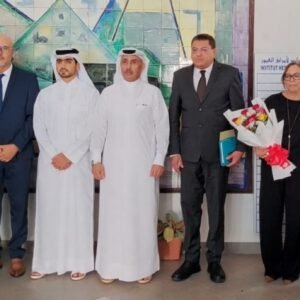
The visit of His Royal Highness Prince Turki Al-Faisal bin Abdulaziz Al Saud to the Republic of Tunisia marked a significant cultural and intellectual moment, reflecting the depth of Arab relations and the spirit of cultural cooperation between the Kingdom of Saudi Arabia and Tunisia. The visit received considerable attention, particularly as the Arab League Educational, Cultural and Scientific Organization (ALECSO) hosted His Royal Highness for the first time for an honorary lecture on serving Arab culture. The event carried intellectual and civilizational dimensions that went beyond protocol, reaffirming the importance of culture as a bridge for Arab dialogue, identity preservation, and openness to the world.
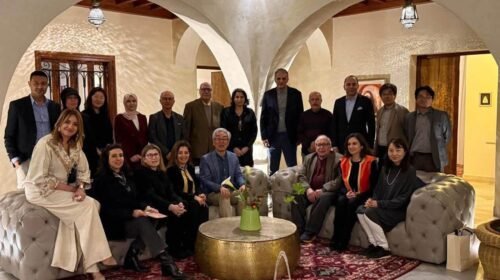
Accompanying His Royal Highness during this important visit was Her Royal Highness Princess Loulwa Al-Faisal, who expressed great admiration for the richness of Tunisian civilization and heritage. During their stay, Arab League Educational, Cultural and Scientific Organization (ALECSO) organized a series of historical and cultural visits for the royal guests, including tours of Great Mosque of Kairouan, Raqqada Museum of Islamic Art, and Al-Zaytuna Mosque. Princess Loulwa was particularly impressed by the depth of Tunisia’s Islamic and intellectual heritage, praising the architectural beauty, historical significance, and cultural legacy reflected in these landmarks.
Prince Turki Al-Faisal is widely regarded as one of the Arab world’s most distinguished figures, successfully combining political leadership, intellectual engagement, and cultural influence with a deep diplomatic vision. For decades, his name has been associated with wisdom, moderation, and steadfast support for Arab and Islamic causes, as well as a firm belief that culture and knowledge are not luxuries, but essential pillars for building nations and safeguarding identity.
Born in Makkah in 1945, His Royal Highness grew up in the household of King Faisal bin Abdulaziz Al Saud, one of the most influential Arab leaders of the twentieth century. The values and vision of King Faisal left a profound impact on Prince Turki Al-Faisal, shaping his lifelong commitment to balanced leadership, dialogue, and international engagement.
Prince Turki received his early education in Saudi Arabia before continuing his studies in the United States, eventually graduating from Georgetown University. He later embarked on a long and distinguished career in public service. Among the most prominent positions he held was Director General of Saudi Arabia’s General Intelligence Presidency for more than two decades, followed by his appointments as Ambassador of the Kingdom of Saudi Arabia to the United Kingdom and later to the United States. These roles highlighted his exceptional diplomatic abilities and strategic insight in handling complex international affairs.
Beyond politics and diplomacy, Prince Turki Al-Faisal has established himself as a leading cultural and intellectual figure. Through his chairmanship of the King Faisal Center for Research and Islamic Studies, he has played a major role in supporting scientific research, intellectual dialogue, and civilizational exchange. He firmly believes that Arab culture can reclaim its global role through education, knowledge, openness, and historical awareness.
During the honorary lecture hosted by Arab League Educational, Cultural and Scientific Organization (ALECSO), Prince Turki emphasized that serving Arab culture is a collective responsibility that transcends borders and institutions. He stressed that Arab culture should not merely be viewed as a glorious past to celebrate, but as a future-oriented project built upon education, intellectual creativity, and pride in the Arabic language while remaining open to the wider world.
In his remarks, His Royal Highness also reflected on the legacy of King Faisal, renowned for his historic positions and enduring statements in support of Arab and Islamic causes. One of King Faisal’s most memorable quotes was: “We are a people who do not seek war, but if it is imposed upon us, we will fight in defense of our faith and dignity.” These words continue to symbolize the principles of wisdom, dignity, and steadfastness that shaped both his leadership and legacy.
Prince Turki Al-Faisal has consistently argued that the strength of nations cannot be measured solely by economics or politics, but also by their ability to protect culture and produce knowledge. This vision has kept him actively engaged in major international forums and intellectual gatherings focused on intercultural dialogue, security, peace, and cultural development.
Among the positions that earned him broad international respect are his continued support for the Palestinian cause, his advocacy for moderation and the rejection of extremism, and his repeated calls for investing in education and enlightened thought across the Arab world. He is also widely recognized for his calm, balanced, and thoughtful approach, relying on reasoned dialogue rather than populism or confrontation.
Prince Turki Al-Faisal has successfully combined a rich political legacy with influential cultural engagement, becoming a model of the intellectual diplomat who believes that thoughtful dialogue can build bridges between peoples and civilizations. Through his continued cultural and intellectual contributions, he remains a prominent voice affirming that Arab culture is still capable of contributing meaningfully to global civilization when carried forward with sincerity, knowledge, and vision.
TunisianMonitorNews (Douha Essaafi)