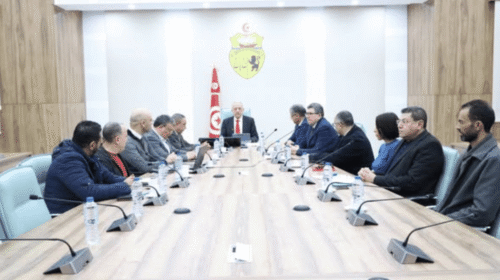
EU-backed ELMED electricity interconnection with Italy
After years of stagnation, Tunisia’s renewable energy sector is experiencing a significant revival. This acceleration is being propelled by renewed confidence and substantial financial support from international lenders, who are actively backing the country’s energy transition. Current attention is focused on two landmark projects: the World Bank-supported Tunisia Energy Reform, Reliability, and Governance (TEREG) Program and the EU-backed ELMED electricity interconnection with Italy, pv-magazine reports.
TEREG Program: A $430 Million Catalyst for Reform
In early November, the Tunisian government and the World Bank signed the TEREG program, a $430 million (€370 million) initiative including $26 million in concessional financing. The program aims to achieve several structural goals: improving the reliability and accessibility of electricity, accelerating renewable project deployment, enhancing the operational performance of the state utility STEG, and modernizing the entire power sector.
TEREG is designed to unlock an estimated €2.4 billion in private investment, aiming to add 2.8 GW of new solar and wind capacity by 2028. The program is expected to create over 30,000 jobs, primarily during the construction phase. Key economic impacts include a projected 23% reduction in electricity supply costs, an improvement in STEG’s collection rate from 60% to 80%, and a cut in public subsidies of about 2.045 billion dinars (€599-600 million). Notably, TEREG is the first project to benefit from the World Bank’s new Financial Incentive Framework due to its significant emissions reduction potential, the same source adds.
ELMED Interconnection: Opening a Gateway to Europe
In parallel, the major ELMED project is advancing. This 224 km subsea cable linking Tunisia and Italy will have a capacity of approximately 600 MW. Approved by the World Bank in 2023 and listed as an EU Project of Common Interest, the €921 million project is a joint venture between STEG and the Italian grid operator Terna.
In early November, the EU and the European Investment Bank (EIB) granted STEG a €12 million technical assistance grant to fund the expertise needed to oversee the project’s implementation. This adds to commitments made in June 2024 at the Tunisia Investment Forum, where €472.6 million was mobilized by the EU and several European institutions.
For both Brussels and Tunis, ELMED is a strategic project to integrate more locally produced renewable energy and will gradually open access to the European electricity market. “This grant paves the way for three billion euros of investment in wind and solar,” stated Dubravka Šuica, European Commissioner for the Mediterranean.
A Long Road to 2030 Targets
Tunisia has committed to raising the share of renewables in its electricity mix to 35% by 2030. Currently, that share stands at just 6%, with solar photovoltaic accounting for 4%. However, nearly 2,200 MW of private projects already launched could rapidly boost this figure to 17%, pending their effective commissioning.
The success of these two mega-projects is seen as critical. If implemented effectively, they could restore Tunisia’s credibility as a viable investment destination capable of undertaking reforms and delivering transformative infrastructure, putting its ambitious green energy targets within reach.
TunisianMonitorOnline (BRC)