Italy announced Tuesday an additional 80 million euros (98 million U.S. dollars) in its investment to fight illegal migration from Africa.
Italy is allocating a further 80 million euros to its 200-million-euro Africa Fund, Foreign Minister Angelino Alfano told an Africa-European Union ministerial conference on migration here.
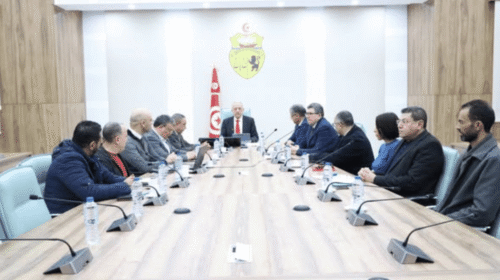
Foreign ministers from African and European countries of migrant transit and destination gathered at the second edition of the conference titled “A Shared Responsibility for a Common Goal — Solidarity and Security”.
Italy launched its Africa Fund in January 2017 to “fight illegal immigration, stop migrant departures, and destroy human trafficking,” according to a foreign ministry statement.
“We want to relaunch economic investments in migration communities of origin and in transit countries,” Alfano tweeted on the foreign ministry account on Tuesday. “Italy has decided to refinance the Africa Fund by an additional 80 million euros.”
In his opening remarks, Alfano called for “increasingly effective management of migratory flows” from war-torn and destitute parts of Africa. This management must be based on the principles of “solidarity and security”, Italian news agency ANSA cited Alfano as saying.
On Twitter, Alfano pointed out to “concrete results” obtained thanks to Italy’s efforts to fight human traffickers jointly with Libya and to spotlight the need to invest massively in sub-Saharan Africa.
In 2016-2017, migrant deaths in the Mediterranean dropped by 40 percent, the number of migrants entering Libya from the rest of Africa dropped from 290,000 to 35,000, and the number of migrants leaving Niger — a major country of transit — dropped from 330,000 to 35,000, Alfano tweeted. “Still a lot of work to do, but we’re on the right path,” the minister said on Twitter.
Conference participants included Algeria, Chad, Egypt, Ethiopia, France, Germany, Libya, Malta, the Netherlands, Niger, Spain, Sudan and Tunisia, plus the United Nations refugee agency UNHCR, the International Organization for Migration (IOM), the Organization for Security and Cooperation in Europe (OSCE) and Bulgaria, the current European Union (EU) council presidency.
On the agenda are investments to help African countries of transit to manage the flows and also to “provide populations along the migrant routes with alternatives to an economy based on human trafficking,” the foreign ministry said in a statement.
As well, participants will talk about assisted repatriation programs, emergency evacuations through UNHCR and the IOM, the protection of human rights, and addressing the root causes of the mass migrations.
The first edition of this conference took place in Rome on July 6, 2017.