Doctors’ brain drain saps $2b from Africa – report

A new report on good governance released by the Mo Ibrahim Foundation has revealed that Africa loses about $2 billion a year due to doctors and health practitioners leaving the continent.Only three countries in Africa, namely Libya, Mauritius and Tunisia, have at least one doctor per thousand people, says the document entitled ‘Ibrahim Forum Report 2018: The Public Service in Africa’ seen by APA on Sunday. The report presented on Sunday in the Rwandan capital Kigali on the sidelines of the ‘Mo Ibrahim Governance Weekend’, indicates that in sub-Saharan Africa…

French-Tunisian baker on the secrets behind Paris’ best baguettes

A French-Tunisian baker, who has won the right to supply the French presidential palace with baguettes for a year, says kneading is the secret behind his prize-winning loaves. “A lot of people go too quickly with the kneading,” Mahmoud M’seddi told the BBC. He is the latest winner of the annual best baguette in Paris competition. Mr M’seddi makes his first visit to the ElysĂ©e Palace on Friday and will now start hand-delivering his baguettes. He is the fourth North African in the last six years to win the award.…

Tunisia’s ‘Start-up Act’ provides incentives for entrepreneurs

While experts agreed the law was a step in the right direction, they warned it should not be considered Tunisia’s sole economic lifeline. A new “Start-up Act” approved by Tunisia’s parliament is being hailed as a “sign of hope” for entrepreneurs. The legislation will provide grants, tax exemptions and government incentives to businesses that qualify as start-ups. The aim is to encourage young people to pursue innovative business ventures and drive growth in the science and technology sectors. “This is a huge opportunity to modernise our economic laws and promote…

Tunisia in transition with hope and challenges, UN expert says

Tunisia has continued to make progress on democracy since the revolution more than seven years ago, including a Constitution guaranteeing fundamental rights for all Tunisians, but there is still a lot to do, says a UN human rights expert. “Tunisia still faces numerous challenges, including setting up key institutions required by the Constitution, such as the Constitutional Court, and aligning a number of overly-restrictive laws with the democratic and human rights standards proclaimed by the new Constitution,” says the UN Special Rapporteur on freedom of religion or belief, Ahmed Shaheed.…

Tunisia Set To Become A ‘Startup Nation’ – Parliament Passes the Startup Act

After two years of deliberation, the Tunisian Parliament passed the ‘Startup Act’ early this month. The Act was formulated by keeping the ecosystem involved and is touted to set the country on the path of becoming a startup nation. Definition of a startup is chalked out clearly which states that the company should not have existed for eight years. Among other mandates, the number of its employees should not exceed 100, more than two-thirds of its shareholders should be founders and preference would be given to startups that leverage technology. The new rule…

Data privacy: new global survey reveals growing internet anxiety

2018 poll of internet users in both developed and developing countries shows varying patterns of attitudes and behaviours toward the digital economy. Nearly four fifths of internet users in North America are concerned about privacy online, saying that internet companies are a primary source of their anxiety. This was 5% more than the year before, the latest poll data shows. The jump, recorded in a poll released today during the first day of E-Commerce Week, reflects growing concerns about data privacy and online security. The survey was conducted by the Centre for International Governance…

Sabbaths in Tunisia’s narrow streets witness cultural history

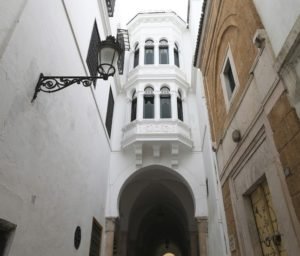
Historical mansions, which have been the subject of legends, where gentlemen resided and assemblies of literature and culture were established, sabbaths invite one into a history where dreams and reality are intertwined When you walk the oldest streets in Tunisia, known in Tunisia as Al Medina al-Quadima, you will come across small chambers above porticos that combine the sides of narrow streets. The word “sabbath,” which Tunisians have borrowed from Andalucia, means chambers above porticos that protect the streets from rain and sun, turning them into closed roads. Those who…

This Man Hopes to Bring Peace to the Middle East by Solving Sky-High Unemployment

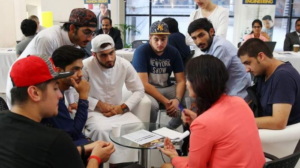
In 2006, Ron Bruder, an American entrepreneur and property developer, set out to see if he could crack one of the Middle East’s most explosive and intractable problems: youth unemployment. He started a non-governmental organization (NGO) called Education For Employment (EFE) to help young people in the region learn a marketable skill and find employment. These are the crucial first steps to building a stable community—a cycle that was utterly broken, as many youths in the Arab world struggled to land jobs. All too often young people graduated from high…

No Foreseeable Remedy for Tunisia’s Ailing Healthcare Sector

Infested with rampant corruption, the public health sector finds itself in the hands of conspirators engaged in the theft and embezzlement of public money through dubious deals. For decades, Tunisia has prided itself on the billions of dollars invested in building an advanced healthcare system that offers decent healthcare for its citizens, as well as Arab and foreign residents and visitors. However, that rosy image is being dissipated by the dark reality of accumulated ailments. Nowadays, the shortage of medicines has become so commonplace. It indicates a huge disruption to…

Arab countries ranked by youth unemployment

Figures showed a worrying 9 percent increase in youth unemployment compared to the results of the previous year. Last year, the results of the ninth ASDA’A Burson-Marsteller Arab Youth Survey showed that more than half of the Arab youth in the region believe that their biggest concern about the future is the fear of unemployment. At the time, 51 percent of young Arabs, male and female between the ages of 18-24, expressed their worries that they might not be able to either keep their current jobs or find new positions, as they complained…