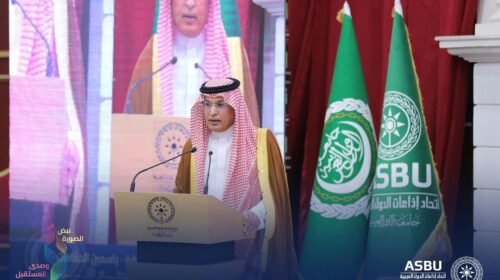
The 26th edition of the Arab Radio and Television Festival came to a close in Tunisia, bringing together broadcasters, media institutions and industry professionals from across the Arab world for several days of competitions, professional activities and cultural events.
The closing ceremony, held at the City of Culture in Tunis, featured the announcement of the winners of the festival’s official and parallel competitions, alongside a special musical performance created for the occasion, bringing the latest edition to a close on a distinctly pan-Arab note.
The results reflected the diversity of contemporary Arab media production, with awards spanning a wide range of formats and themes, including news, cultural, economic and sports programming, children’s and women’s content, social programmes, drama, documentaries, podcasts and digital media.
Tunisian media institutions recorded a notable presence among the winners, securing five awards — four in the official competitions and one in the parallel competitions.
In the radio categories, Monastir Radio, part of Tunisia’s national broadcasting network, won first prize in the motivational programmes category for “From Challenge Come Miracles,” while Youth Radio took first place in the children’s programmes category for “A Small Dream.”
Tunisian television also featured prominently in the results. Tunisian Television won first prize in the news reports category for “When the Scorched Earth Blooms,” while the programme “Tonight Is a Celebration” received the top award in the variety and artistic entertainment category. The television programme “Homes of Art” also secured second prize in the cultural programmes category.
In the parallel competitions, the first prize in the women’s programmes category went to “Women Pioneers,” produced by Diwan FM Radio in Tunisia.
Beyond the Tunisian results, the festival’s awards highlighted a broad spectrum of Arab media experiences, with winning productions coming from several countries, including Oman, Saudi Arabia, Algeria, Iraq, Palestine, Qatar, Egypt and Morocco.
The radio competitions featured productions addressing cultural, economic and sporting themes, as well as drama and other forms of programming. Among the winners, Oman secured first prizes in the cultural and economic programmes categories, while Saudi Radio won the top award in the sports programmes category. Oman’s Ministry of Information also received first prize in the radio drama category.
The television competitions similarly reflected the diversity of Arab production, with winning works addressing youth, culture, humanitarian issues, the environment and the Palestinian cause, alongside entertainment and dramatic productions.
Among the notable television awards, “Youth Talk” from Oman Television won first prize in the talk-show category, while “Humanity Under Bombardment” from the Iraqi Media Network received the top award in the documentary category dedicated to the Palestinian cause. “The Arab Humpback Whale,” also from Oman Television, won first prize in the general documentary category.
The Algerian public broadcaster’s “Sand Sandals” took first prize in the cultural programmes category, while MBC Egypt productions won the top awards in the comedy and social drama categories for “Engineer Samir” and “No Returns, No Exchanges,” respectively.
The festival also reflected the growing role of digital formats within the Arab media landscape. “Babylon: A Civilization Not to Be Forgotten,” produced by the Iraqi Media Network, won first prize in the new media category, while “Judges of Hope” from Palestine’s Mawtini Radio topped the podcast competition. The Palestinian Radio production “Roots That Never Wither” won first prize in the social programmes category.
The closing ceremony also featured “Travel to You, and Sing,” a musical production created exclusively for the festival by Tunisian music researcher Karim Thlibi and conducted by maestro Rassem Dammak.
The performance brought together artists from Egypt, Palestine, Sudan, Oman, Algeria and Kuwait in a musical journey through Arab maqams and diverse regional musical traditions. It concluded with a collective orchestral rendition of “Mawtini,” bringing together the participating artists on one stage.
With the conclusion of its 26th edition, the Arab Radio and Television Festival once again provided a platform for Arab media institutions to showcase their productions, compete across an expanding range of formats and engage with the evolving dynamics of broadcasting and digital content.
The latest edition also highlighted the transformation of the Arab media landscape, where traditional radio and television production increasingly intersects with digital platforms, podcasts, new forms of storytelling and emerging approaches to cultural and social content.
The festival thus concluded its 26th edition in Tunisia with a broad representation of Arab media experiences, while Tunisian broadcasters and producers secured a significant presence among the event’s award-winning productions.
TunisianMonitorNews (Douha Essaafi)