Tunisia has secured a €60.92 million ($67.5 million) grant from the Dutch government to help protect its coastline from erosion and other environmental threats.
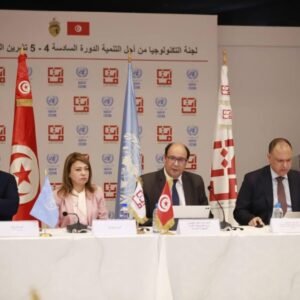
The financing agreement, signed on Tuesday, Nov. 10, will support the Tunisian Coastal Protection Program (PPLT), which addresses growing risks facing the country’s coastal areas.
The grant will finance the fourth and fifth phases of the program, along with an additional phase. It falls under the Netherlands’ DRIVE financing mechanism, implemented by Invest International.
Planned projects cover several coastal areas. Protection work is scheduled in Bizerte, the Sousse-Sud, Skanès and Qaraiya areas, Monastir, and the northeastern part of Djerba Island. A coastal protection study will also be conducted in the Béni Khiar–Yasmine Hammamet area.
The Dutch contribution adds to the Tunisian Coastal Protection Program, which began in 2013 through cooperation between Tunisia and Germany, with financial support from German development bank KfW.
Mounting coastal challenges
Tunisia faces mounting challenges in protecting its coastline. Coastal erosion and shrinking beaches have become more severe due to rising sea levels and the effects of climate change. Other threats include coastal flooding, the deterioration of coastal ecosystems, marine pollution, and pressure from urban development and tourism.
The country also faces biodiversity loss, the disappearance of certain species, and increasing waste generation, particularly plastic waste, which contributes to pollution in the Mediterranean Sea.
Beyond these environmental pressures, Tunisia faces shortcomings in environmental management. According to the Ministry of Environment, these problems are linked to “governance methods, economic and territorial planning, the allocation of budgetary resources, and choices of production models and technologies.”
National strategy for ecological transition
To address these challenges, Tunisia has adopted a National Ecological Transition Strategy for 2035–2050. The strategy is designed to preserve the country’s natural resources over the long term while improving resource efficiency across economic development activities.
Built around five main priorities, the strategy includes measures to establish a more integrated system of institutional governance, lay the foundations for a green economy, and strengthen environmental awareness, scientific research, knowledge and workforce skills.
These efforts cover environmental protection, sustainable development and responses to the effects of climate change.
TunisianMonitorNews