While energy-efficient data centre projects advance across the Middle East, a new partnership aims to leverage Tunisia’s unique geographical and green energy advantages to establish the country as a strategic hub for sustainable artificial intelligence computing.
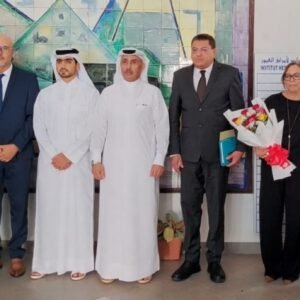
Earlier last week, Tunisian sustainable digital infrastructure developer SoleCrypt and global energy management giant Schneider Electric signed a memorandum of understanding (MoU). The agreement focuses on studying and co-developing next-generation, sustainable AI data centres within Tunisia.
These planned facilities are specifically engineered to host intensive AI computational workloads while minimising carbon and water footprints. The collaboration seeks to capitalise on Tunisia’s growing strengths in renewable energy, its connectivity via international submarine fibre optic cables, and an expanding digital ecosystem to serve both European and MENA markets.
“This partnership is a direct move to position Tunisia as a competitive platform for sustainable computing,” an industry observer noted. Under the plan, SoleCrypt will provide strategically located sites with robust connections to the national power grid and telecom infrastructure, promising sub-10-millisecond latency to southern Europe—a critical metric for high-performance computing.
Schneider Electric will serve as the key technology advisor, supplying AI data centre reference architectures developed with chipmaker Nvidia, alongside comprehensive electrification, secure power, liquid cooling, and infrastructure management solutions.
Regional Context: A Shared Drive for Efficiency
The Tunisian announcement follows a familiar regional pattern prioritising power optimisation. Just days before, a coalition in the United Arab Emirates—including the Ministry of Energy and Infrastructure, Khazna Data Centres, and investor Agility—revealed a pilot program to deploy AI-powered efficiency software from a firm called Phaidra.
That initiative targets the reduction of cooling energy consumption and enhancement of infrastructure resilience, particularly in high-temperature environments. It underscores a region-wide imperative as energy-intensive AI workloads grow.
Tunisia’s Strategic Edge
Analysts suggest Tunisia’s proposition differs by anchoring its appeal in sustainability and proximity. “The focus on renewable energy integration and low-latency access to Europe creates a distinct value proposition,” commented a sector specialist. “It’s not just about efficiency within the data centre walls, but about powering them with a greener grid and serving a key market.”
The SoleCrypt-Schneider Electric MoU represents a concrete step toward translating Tunisia’s potential into infrastructure, aiming to attract AI-driven investment by combining ecological credentials with technical performance.
TunisianMonitorOnline (NejiMed)