The technical funding boost for the ELMED project underscores a strategic energy partnership, aiming to enhance electricity security and accelerate the green transition across the Mediterranean.
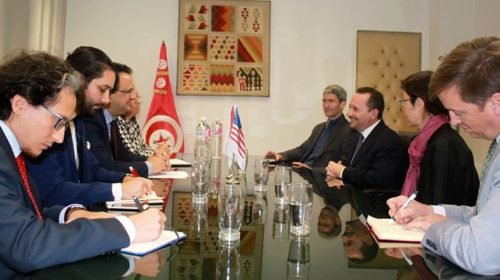
The European Union (EU) and the European Investment Bank (EIB) have reinforced their commitment to Tunisia’s energy transition by granting a €12 million subsidy to the Tunisian Electricity and Gas Company (STEG). Finalized Thursday in Tunis, this support will fund the crucial technical expertise needed to realize the pioneering ELMED project, the first-ever electricity interconnector between Tunisia and Italy.
A Mediterranean Energy Backbone
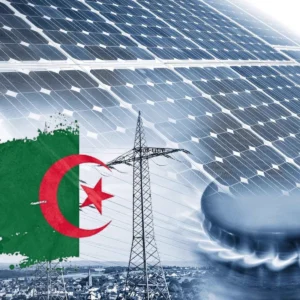
The 224-km subsea cable, a joint project of STEG and its Italian counterpart TERNA, represents a total investment of €921 million. Listed as an EU Project of Common Interest (PCI), ELMED is considered strategic for the region’s energy future.
This investment is more than just a power line; it aims to create a bridge linking Tunisia’s grid to the European electricity market. The expected benefits are multifold: enhancing Tunisia’s security of supply, accelerating the integration of renewable energy into its grid, and fostering closer electricity market integration between the two shores of the Mediterranean.
Substantial and Coordinated European Backing
This technical grant, implemented by the EIB, is part of a broader financial mobilization by “Team Europe.” In June 2024, a €472.6 million package—combining EU grants and loans from the EIB, the EBRD, and Germany’s KfW—was already announced for ELMED. This new funding also falls under the ambit of the 2024 Memorandum of Understanding on Energy, which paves the way for €3 billion in investments in Tunisia’s wind and solar sectors.
Partners United by a Common Vision
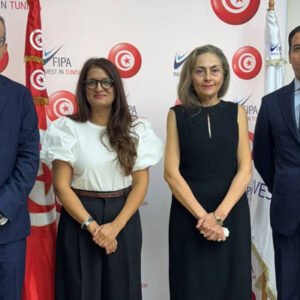
At the signing ceremony, European Commissioner for the Mediterranean, Dubravka Šuica, stated: “Together, we are advancing the energy transition and prosperity in the Mediterranean.” She emphasized how this support enables the EIB to provide top-tier technical assistance to STEG for overseeing the historic project.
Ulrich H. Brunnhuber, Head of the MENA Division at the EIB, affirmed that this support “reflects the shared will of Tunisia and the European Union to invest together in the energy transition, stability, and economic prosperity in the Mediterranean.”
From the Tunisian side, Mr. Faycel Tarifa, CEO of STEG, welcomed the joint commitment of European partners, which “confirms the willingness to make Tunisia a key player in the regional energy transition.”
This project is anchored in a long-standing cooperation between the EIB and STEG, with eleven financings provided since 1995. It embodies the EU’s “Global Gateway” strategy, which aims to promote smart, clean, and secure investments worldwide, and decisively positions Tunisia as an essential energy hub at the heart of the Mediterranean.
TunisianMonitorOnline (NejiMed)