Big Opportunities and Challenges for Big Law in Africa

At the end of June, DLA Piper acquired firms in Senegal and Tunisia, boosting its presence in Africa to 19 countries. It’s a sign, according to Bloomberg Law, that Big Law is starting to see the potential for legal work in the region. Several African countries could use the help. Statistics from the Law Society of South Africa paint a bleak picture, with a per capita population of lawyers of 1 to about 2240 people. The situation is even more dire in Zambia, where a University of Pennsylvania law school study…

Tunisia Takes a Big Step to Protect Women From Abuse

 Tunisia has long been regarded as a pioneer for women’s rights in the Arab world, but the day-to-day life of many Tunisian women is still one of abuse and harassment. So when Parliament passed a measure last week outlawing violence against women, some burst into ululation and passed around bouquets of jasmine. The new law makes it easier to prosecute domestic abuse, and it imposes penalties for sexual harassment in public spaces. It says that citizens are entitled to notify the police if they witness violence against women, and that children…

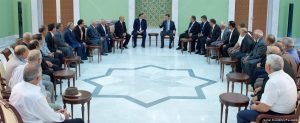
Tunisia’s Nobel prize-winning union meets Bashar al-Assad

UGTT called for support for the Syrian president in his ‘war against terrorism’ A delegation from the Nobel-prize winning Tunisian General Labour Union (UGTT) has sparked controversy after a delegation of leaders met Syrian President Bashar al-Assad. According to a statement put out by the union, a delegation chaired by general secretary Bouali M’Barki and composed of 21 trade union leaders, met Assad in Damascus on Saturday. It said the visit aimed to show solidarity with the Syrian people in their “war against terrorism”. More than 3,000 Tunisians have reportedly…

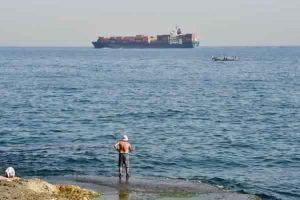
Temperature and salinity double in Mediterranean

The Mediterranean is responding very quickly to global warming and the rate of evaporation is higher than precipitation and fluvial supply. Temperatures and salinity is also increasing at two and a half times the rate at the midway point in the twentieth century and higher than that of the oceans, according to research published in Scientific Reports by a team of oceanographers from the marine sciences institute of the Italian national research center (ISMAR-CNR), the National Oceanography Centre di Southampton (UK) and the Institut National des Sciences et Technologies de…

North Africa: What Will It Take to Make the Arab Maghreb Union Work?

The Arab Maghreb Union (AMU) was formed in 1989 by Algeria, Libya, Mauritania, Morocco, and Tunisia as a vehicle to promote economic and political integration among these North African countries. Their good intentions quickly foundered on the domestic and regional conflicts that dominated the next two decades. Mauritania faced several coup attempts, ending with the election of President Mohamed Ould Abdel Aziz in 2009; Tunisia was under the control of President Zine El Abidine Ben Ali from 1987 until the Arab Spring revolution of 2011; Libya was ruled by Muammar…

WFP Tunisia and Morocco Country Brief, June 2017

Highlights WFP has collaborated with the Tunisian Institute of Strategic Studies (ITES) to conduct a strategic review of the food and nutrition security in the country. On June 14, the findings of the study were shared during a one-day conference attended by 30 different national and international stakeholders including the Minister of Agriculture. A group of rural women has formally registered as a Community Based Organisation with the aim of maintaining and promoting the school garden that is part of the WFP-developed Sustainable School Meals Pilot in Zaghouan Governorate, Tunisia.…

Tunisia Tourism Gets Boost as UK Lifts Two-Year Travel Ban

About 3.5 million tourists have visited Tunisia up to July, said Minister of Tourism and Handicrafts Selma Elloumi Rekik. Tunisia managed to recover traditional markets, such as France. The lifting by the UK of the Tunisia travel ban was also behind tour operators considering the relaunch of programmes, the Minister said as she paid a visit to Mahdia. Tunisia needs to open onto new markets, such as the Gulf region and China, she indicated. Tourist attraction and cultural activities are of crucial importance for these untapped markets which requires the diversification of…

Tunisian businessmen keen to invest in Qatari market

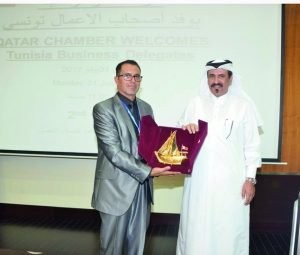
The visiting members of a Tunisian trade delegation have expressed their keen interest to invest in Qatari, especially to establish industrial projects, to meet the growing needs of the local market. Qatar Chamber (QC) also expressed its readiness to establish effective cooperation between Qatari and Tunisian businessmen to enhance the mutual economic benefits for the private sector of both countries. Cooperation between Qatari and Tunisian businessmen is one of the pillars of strong relations between the two countries, QC vice-president Mohamed bin Ahmed bin Tawar Al Kuwari said during a…

EXCLUSIVE INTERVIEW with Petras Auštrevicius, MEP and Vice-President of the ALDE Group

EP Petras AuÅ¡trevicius: EU Moving From Development Assistance to Political-Economic Partnerships in North Africa EUBULLETIN talked in an EXCLUSIVE INTERVIEW with Petras AuÅ¡trevicius, member of the European Parliament and a vice-president of the ALDE political faction where he also acts as a coordinator for ALDE in the Subcommittee on Human Rights (DROI). EUBulletin: Can you please elaborate a little bit on the European Neighbourhood Policy vis-à-vis the North African region? Back during the Arab Spring series of revolutions, the EU admitted some mistakes concerning its policies in North Africa and…

The challenges of building an industrial economy in Africa

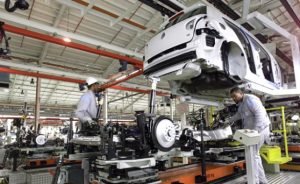
The manufacturing sector could boost huge economic growth for the continent but its share of GDP has not moved from around 11 per cent over the last 10 years. Economist Moin Siddiqi investigates In today’s sophisticated global economy, Africa remains a weak link. The region could become an emerging manufacturing hub through optimal development of natural and human resources and increased technological transfers. Li Yong, director-general of the United Nations Industrial Development Organisation, said: “Africa is by no means destined to lag behind the rest of the world economy. But…