Tunisian pomegranates with sweeter and softer seeds

Now is the season in which Chinese pomegranates enter the market, but because they aren’t easily peeled and their seeds are both plentiful and hard, the pomegranates were instantly placed on the list of ‘niche fruit’ and the market demand has become extremely limited. In the past few years, pomegranates from Tunisia seem to have untied the shackles of the pomegranate products, which have been there for many years. Tunisian pomegranates do not only contain softer seeds and more juice, but the edibility rate can reach peaks up to 90%. Moreover, with their large…

Amnesty wants secure path to Europe for migrants in Libya

Ahead of a meeting of the Central Mediterranean Contact Group (CMCG) in Bern on Monday, Amnesty Switzerland has called to make it easier for migrants to be evacuated from Libya and resettled in Switzerland and other European countries. On Thursday, the Swiss section of the international NGO criticised the CMCGexternal link for claiming to want to protect migrants detained in Libya under inhumane conditions while denying them safe passage to Europe with aid of the Libyan coast guard. Since the beginning of the year, around 14,000 migrants have been rescued at sea…

EU wheat edges down as USDA report offsets Algeria tender hopes

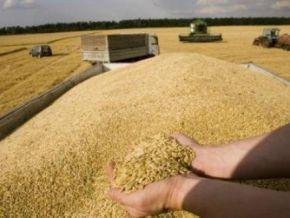
Euronext wheat futures turned slightly lower in late trading on Thursday to close at a one-week low, after higher than expected estimates of U.S. corn and soybean production quelled optimism about French wheat clinching export sales in an Algerian tender. December milling wheat on Paris-based Euronext settled down 0.25 euro, or 0.2 percent, at 160.25 euros ($186.60) a tonne, its weakest level since Nov. 2.  It earlier added as much as 1.25 euros, recouping losses from Wednesday, supported by hopes for French wheat in Algeria’s tender on Thursday as well…

Mozambique war-time Western wins at Tunisia film festival

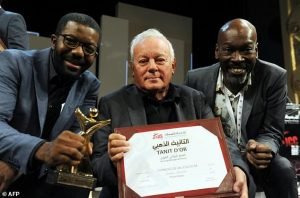
The story of an epic train journey across war-torn Mozambique by a Brazilian director has been awarded the top prize at Tunisia’s Carthage Film Festival. “The Train of Salt and Sugar” by Licinio Azevedo, a Brazilian who lives in the African country, received the Tanit d’Or as the festival wrapped up on Saturday. Like a Western, the film follows the perilous journey of a train that sets off across rebel-held areas to exchange salt for sugar in 1989 during Mozambique’s civil war. The Tanit d’Argent went to South Africa’s John…

Tunisia hopes to attract investors

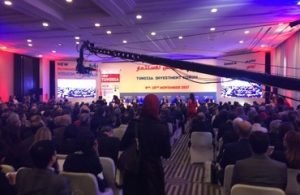
At the Tunisia Investment Forum in Tunis, agribusiness, infrastructure and logistics projects were presented. Brazilian partners are wanted. The Arab Brazilian Chamber was there. There are several opportunities in ongoing projects for Brazilian entrepreneurs in Tunisia. Industries such as infrastructure, logistics and agriculture are booming in the North African country, which is also selling itself as a major gateway to other countries in the continent. The opportunities were made public during the Tunisia Investment Forum on Thursday (9) and Friday (10) in Tunis. The Arab Brazilian Chamber of Commerce International…

Tunisia complete Africa’s World Cup line-up with Libya draw

Tunisia guaranteed top spot in World Cup qualifying Group A and secured their ticket to Russia despite being held 0-0 at home by Libya on Saturday. The Eagles of Carthage headed into their final fixture knowing that they would definitely reach the World Cup if they avoided defeat, but were frustrated by their neighbours. They enjoyed 71 percent of the possession, but their finishing was profligate and they were unable to secure the goal that may have killed off the visitors’ resolve. Tunisia’s point ensures their fifth World Cup participation…

Explaining the recent spike in migration from Tunisia to Europe

Over the past few weeks Tunisia has attracted increasing attention for the revival of its migration route toward Italy. 4,500 people from Tunisia reached Italy in 2017 – a fourfold increase on last year, with more than 3,000 arriving between September and mid-October. A host of false claims have been made about the reasons for this recent spike in Tunisian arrivals, which this article seeks to dispel. The analysis here suggests that the primary cause for the uptick is Tunisia’s deepening socio-economic and political challenges. This makes it hard to see…

AfDB approves €72 million loan for radical upgrade of Tunisia’s digital capability

The Board of the African Development Bank Group has approved a loan of €71.56 million to support the implementation of ‘Digital Tunisia 2020’ National Strategic Plan. The Tunisian government is contributing €63.4 million, bringing the total cost of the project to €134.96 million. The project is national and all-encompassing.  The ‘Digital Tunisia 2020’ National Strategic Plan (PNS) will be executed between 2018 and 2021.  The project will strengthen public services through the use of digital platforms, on a grand scale and includes, notably, the implementation of online administrative services, sectoral…

Cleaning a Dirty Sponge Only Helps Its Worst Bacteria, Study Says

Stop. Drop the sponge and step away from the microwave. That squishy cleaning apparatus is a microscopic universe, teeming with countless bacteria. Some people may think that microwaving a sponge kills its tiny residents, but they are only partly right. It may nuke the weak ones, but the strongest, smelliest and potentially pathogenic bacteria will survive. Then, they will reproduce and occupy the vacant real estate of the dead. And your sponge will just be stinkier and nastier and you may come to regret having not just tossed it, suggests a study published last…

Dinosaurs would have survived if asteroid hit Earth elsewhere, scientists claim

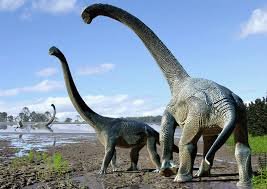
When the cosmos shoots pool, it plays for keeps. It sank a six-mile-wide rock in our pocket of the solar system 66 million years ago. The smack of the asteroid against Earth released energy on the order of billions of atomic bombs. Dinosaurs were the cataclysm’s most famous victims, joined by sea creatures, plants and microorganisms. All told, Earth’s biodiversity shrank by 75 percent in what is known as the Cretaceous-Paleogene, or K-Pg, extinction (also known as the K-T extinction). A large asteroid strike happens only once every 100 million years. And a controversial new report suggests the K-Pg impact…