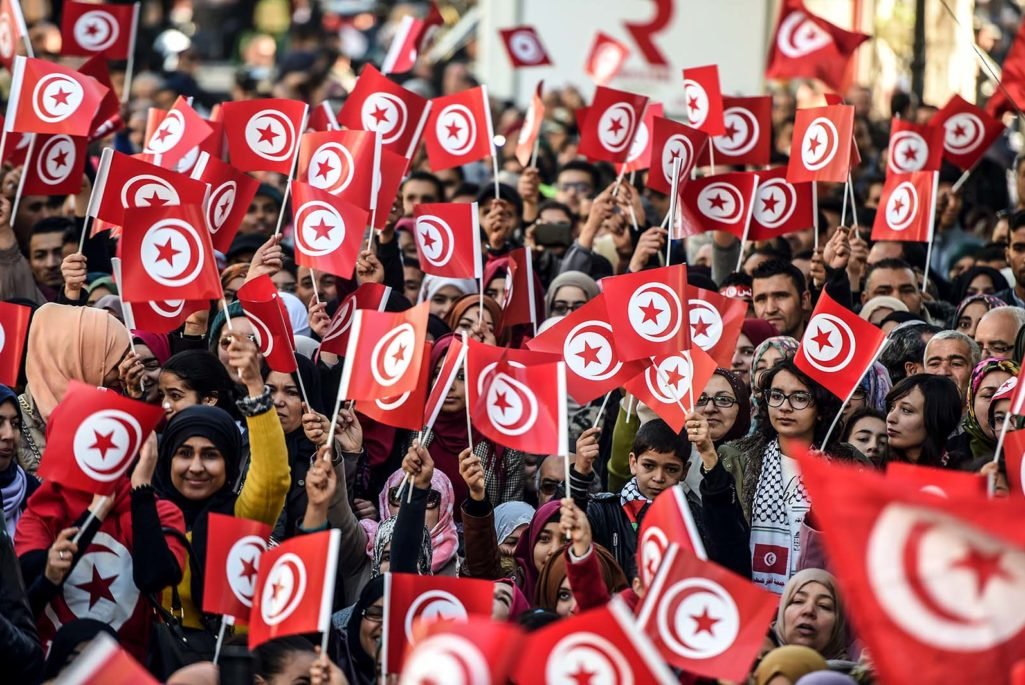
This Wednesday, Tunisia observes the 15th anniversary of its revolution’s outbreak, a foundational moment that redrew its political map and continues to dictate its turbulent journey. The commemoration itself is a testament to the revolution’s unfinished story, its meaning still fiercely contested in the halls of power and the streets of its birthplace.
The narrative of the Tunisian Revolution has been officially recalibrated. Once celebrated on 14 January, the day former strongman Zine El Abidine Ben Ali fled the palace, the national day is now fixed to its origins: 17 December 2010. This shift, decreed by President Kais Saied, is profoundly political. In Sidi Bouzid, where he made his first post-election visit, Saied argued that the true honor belongs not to the regime’s fall, but to the spark that made it inevitable. He has dismissed the January date as an “operation aimed at salvaging the regime,” instead pointing to late December, when chants for the dictatorship’s downfall first rang out after further bloodshed.
The revolution promised a triad of ideals: freedom, dignity, and social justice. In the decade and a half since, the country has lived a seismic transformation. A new constitution was forged. The iron grip of a one-party state gave way to a fractious pluralism. Elections, however contentious, became routine. Civil society breathed free.
Yet, the anniversary is less a victory lap than a national audit. The economic ledger, particularly in the marginalized interior that birthed the uprising, tells a story of stagnation and frustration. Debates rage—in cafes, newspaper columns, and parliament—over whether the core demands of the revolution have been betrayed. Issues of regional inequality, youth unemployment, and corroded living standards remain raw, fueling a pervasive sentiment that the political metamorphosis has not delivered a corresponding social and economic dawn.
Across the republic, commemorations unfold through photo exhibitions retracing the uprising’s arc, symbolic marches, and cultural dialogues. They are acts of memory and of vigilance, as civic groups and citizens strive to anchor the rule of law, equality, and hard-won freedoms against persistent headwinds.
The economic picture, long the revolution’s most vexing puzzle, shows flickers of change. Successive governments have grappled with deep structural flaws, exacerbated by global crises. The current administration points to nascent green shoots. Presenting the 2026 budget to parliament, Prime Minister Sara Zaafrani Zenzri struck a note of cautious optimism, declaring the national economy “on a clear path to recovery.” She cited a 3.2% GDP expansion in the second quarter of 2025 and projected a growth target of 3.3% for 2026.
Her assessment finds a cautious echo in international quarters. The World Bank projects Tunisia is slowly emerging from stagnation, forecasting growth around 2.4-2.6% for 2025, lifted by rebounds in agriculture, tourism, and construction. Yet, the bank’s figures—more conservative than the government’s—underscore the fragility of the climb.
For the state, the true measure of recovery remains social. Prime Minister Zenzri emphasized a continued commitment to the revolution’s social justice mantle: job creation, battling unemployment and precarious work, empowering marginalized groups, and bolstering healthcare and education. It is an acknowledgment that the ultimate testament to December 17 will be written not just in growth statistics, but in the tangible dignity of Tunisians’ daily lives.
Fifteen years later, the revolution is both a monument and a mirror. Tunisia today pauses to remember the spark in Sidi Bouzid, gazing at its reflection to judge how much of its original flame still burns, and how much of its promised warmth has yet to be felt.
TunisianMonitorOnline (NejiMed)