Tyre fell in 332 BC to the armies of Alexander the Great, and its citizens were massacred. Some escaped the wrath of
Alexander’s army by bribery or stealth or luck, fled to North Africa and founded Carthage, in what is now Tunisia.
Most people have never heard of it. Some don’t know where it is. Few know how long it lasted. And even fewer understand its contributions to the world, such as the invention of glass and the use of stars to navigate ships.
Most Carthagians were Phoenicians who came from Tyre in Lebanon. They predated the ancient Greeks. Tyre fell in 332 BC to the armies of Alexander the Great, and its citizens were massacred. Some escaped the wrath of Alexander’s army by bribery or stealth or luck, fled to North Africa and founded Carthage, in what is now Tunisia.
The city was originally called Kart-hadasht (new city), which mutated to Karchedon under the Greeks and further mutated to Carthago under the Romans.
The desolate ruins lie under the sands of the modern city of Tunis. According to legend, it was founded in 813 BCE by the Queen Dido. Her romance with Aeneas, the Trojan War second only to Hector, continues to be enacted in plays and in operas.
Most of them draw their inspiration from Virgil’s Aeneid. Christopher Marlowe, Shakespeare’s contemporary, dramatised their doomed romance in a play when he was only 19. In his rendition, many of the lines are in the original Latin.
During its heyday, Carthage was the leading power in the Mediterranean. It sat astride the major trading routes that went east-west from the Levant to Spain, and north-south from Sardinia to Carthage.
Carthagians colonised southern Spain, Sardinia and western Sicily. For three centuries, the Carthaginian navy controlled the Mediterranean, and its harbour at Carthage was a marvel of engineering. The Carthagian civilisation flourished for seven centuries, and then it vanished in 146 BC.
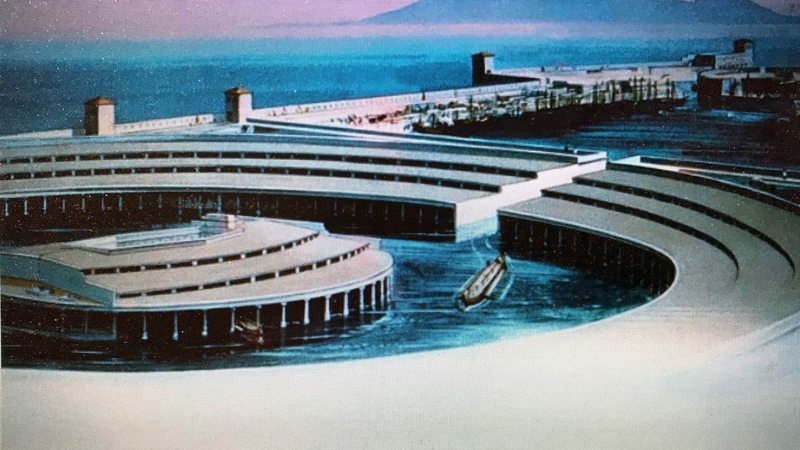 Its disappearance at the hands of the Romans was so unlike the conquest of Greece. “Greece captured its conqueror,” noted Horace. Its culture reappeared as Roman culture so that most Romans spoke both Greek and Latin. But none spoke a word of Carthagian.
The misfortunes that befell the Carthagians are the focus of a book by the Australian historian Richard Miles. It is regarded as the most scholarly account of the lost civilisation.
Since no works by the Carthagians have survived, Miles relies on ancient texts written by the Greeks and on archaeological evidence to uncover the mysteries. The book chronicles the ebb and flow of Carthaginian influence in the central Mediterranean, as it competed with the Greek city-states of the region for resources and power.
Its title is borrowed from a statement of Cato’s, the most strident of Rome’s senators. He famously said: “Carthago delenda est” (Carthage must be destroyed). According to one source, he made sure that all his speeches ended with that statement, regardless of the topic.
What comes through in the book is an indictment of the Romans, who as the victors, turned the Carthagians into a despotic and barbaric people, the likes of which mankind had never seen. The triumph of Rome over them was cast as the triumph of good over evil.
As Miles puts it, “The brutal destruction of the city gave the Romans the freedom to transform Carthage into the villainous antitype against which the ‘Roman’ virtues of faithfulness, piety and duty could be applauded.”
Carthage was a major threat to Roman dominance and it was a question of time before the two major powers of the ancient world would clash. In what would be called a World War by today’s standards, they clashed not once or twice, but thrice in what would be memorialised in history as the Three Punic Wars.
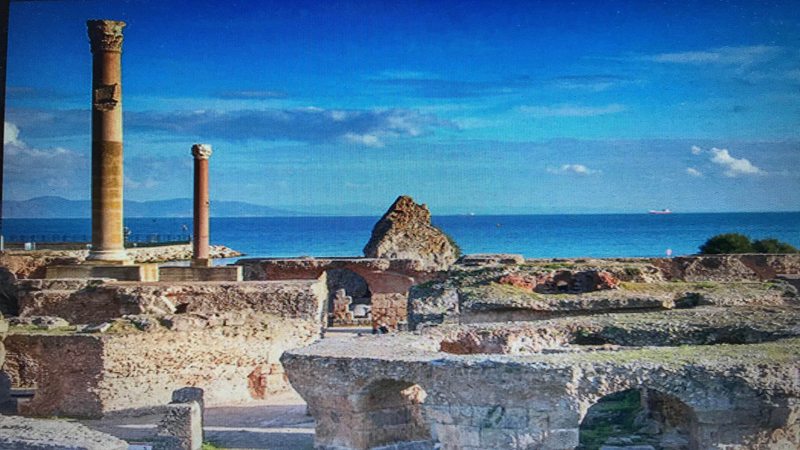 Ultimately, the wars proved to be a classic instance of over-reach by the Carthagians. Their armies were led by Hannibal, indisputably one of the greatest generals in history. In the late third century BCE, he achieved strategic surprising by coming into Italy from the northern side, crossing the Alps on elephants and not from the sea. His victory in the Battle of Cannae has gone down as one of the most famous in world history.
He brilliantly combined cavalry and light infantry tactics with diplomatic enticements that detached Rome from its Italian allies to defeat the Romans. Then, just as Rome seemed to be within his grasp, it slipped away.
Hannibal made two blunders. First, he thought the Romans would sue for peace, just as Napoleon had thought the Russians would sue for peace once he had conquered Moscow. But the Russians didn’t. Neither did the Romans. Hannibal now badly needed reinforcements but he did not have any.
Second, his desire to escape to Carthage by sea ran into a dead-end. The Greek states lay in his way. One agreed to let him through but only on the condition that the others recognise it as their overlord. They would not agree to surrender their sovereignty and remained loyal to Rome. As Miles puts it, Hannibal soon found himself on the “the road to nowhere.”
From afar, a Roman general named Scipio had been watching Hannibal’s tactics and learning from them. He decided to take the battle to Carthage, just as Hannibal had brought it to Rome. He brokered a deal with Numidia (present-day Algeria), the source of Hannibal’s best cavalry, to ravage Carthage’s home provinces. Then he went on to besiege Carthage and sat there for three years until it fell.
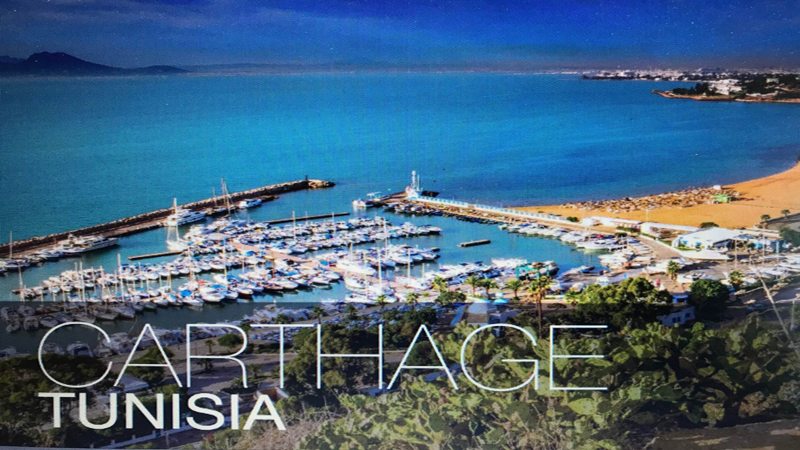 After sacking the city, the Romans burned it to the ground, leaving not a single stone sitting atop another. Years later, Julius Caesar ordered that it be rebuilt. But he was murdered on the floor of the Senate on the Ides of March. Carthage rose again, five years later.
Victory had unexpected consequences for the Roman Republic. Infighting spread among the senators as they competed for control of the vast haul of treasure, land and slaves. Decades of this civil strife ended the Roman Republic.
“With the obliteration of its greatest rival, Rome had arrived as a world power,” Miles notes at the end of his book, “while at the same time setting in motion the cycle that would eventually lead to its own destruction.”
In the last line of the book, there appears the ultimate indictment of Roman motives: “As long as the Romans needed proof of their greatness, the memory of Carthage would never die.”
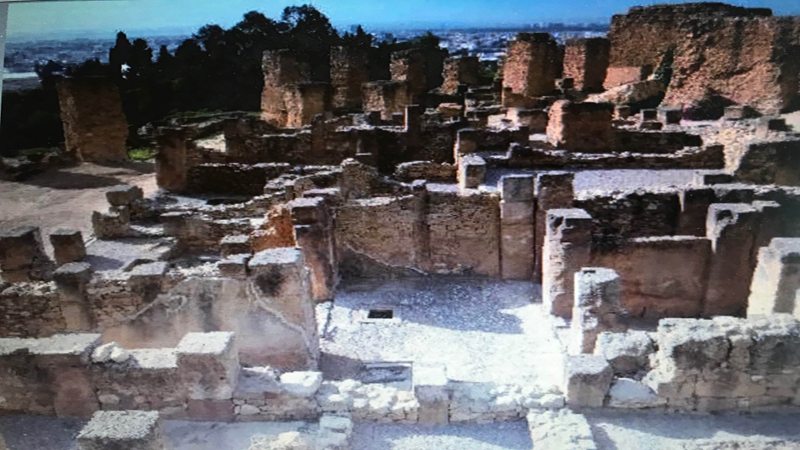
A number of questions remain unanswered in the book, perhaps because few records survived the destruction of Carthage. What distinguished the Carthagians from their neighbours? What was their diet? Were they tolerant of the religious beliefs of others? Why did they practice child sacrifice? Did they write poetry or history, tragedy or comedy? What did the city look like to a visitor from afar? What was the role of women in society?
 The book is scholarly, with 148 of its 521 pages devoted to footnotes, bibliography and an index. Most readers would do well just to read the prologue, the introduction and the last couple of chapters.
Miles’ history, masterful as it is, is unlikely to hold the interest of most readers. His prose is stoic, dry, and prolix, unlike that of Stacy Schiff’s ‘Cleopatra’. Now that is a genuine page-turner, while still being a piece of scholarly work.
The author reads military history for entertainment. He can be reached at ahmadfaruqui@gmail.com
Published in Daily Times, February 5th 2018.