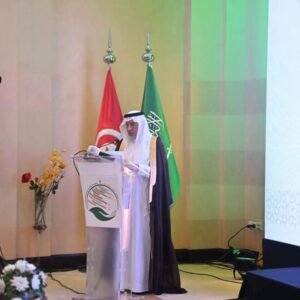
The Japan International Cooperation Agency (JICA) signed a loan agreement in Tunis on 18 November for up to ¥9,559 million (approximately €54.4 million) to complete the remaining works of the seawater desalination plant in Sfax, Tunisia’s second-largest city, which currently relies on other regions for about 80% of its water supply.
The agreement was signed by Samir Abdelhafidh, Minister of Economy and Planning, and Tanaka Kotaro, Director General of JICA’s Middle East and Europe Department, the agency announced on 19 November. Although the project is labelled the Sfax Sea Water Desalination Plant Construction Project (II), it is a supplementary loan for the same plant rather than a new phase of capacity.
Financing Gap Drove Additional Funding
The original loan agreement for the plant was signed in July 2017, and the main desalination facility was completed in September 2024, after which the contractor’s two-year defect liability period began. However, higher costs caused by exchange-rate fluctuations and inflation opened a financing gap that prevented some components from being finished, prompting the Tunisian government to request additional Japanese funding in August 2024.
The new money covers the works left unfinished by the cost overrun, for which invitations to the consultants have already been issued and the first international competitive bidding package has been announced. Procurement is untied, meaning firms from any country can compete.
The executing agency is SONEDE (Société Nationale d’Exploitation et de Distribution des Eaux), Tunisia’s national water utility, which will also operate and maintain the plant once the contractor hands it over.
Water Scarcity Makes Desalination a Priority
Sfax receives about 230 mm of rain a year, against roughly 500 mm in Tunis, and the metropolitan area sits at the downstream end of the transmission systems that bring water from northern and central-western Tunisia.
Shortages have affected the city since 2017, driven by population growth, limits on groundwater abstraction and, more recently, the consecutive droughts of 2019–2023, which is why the government lists desalination as a priority in its 2026–2030 development plan.
The plant, inaugurated on 18 June 2026 at a ceremony attended by Tunisian and Japanese officials, has made continuous supply possible in Sfax since 2025. JICA nevertheless projects a supply-demand gap of about 60,000 m³/day by 2030, while some facilities have been designed in line with a master plan that targets an eventual 200,000 m³/day.
Serving 650,000 Residents
JICA estimates that the project will serve about 650,000 residents of the Sfax metropolitan area, where average supply stood at 114,732 m³/day in 2015. The project’s targets for 2031 are to raise that figure to 165,000 m³/day and to bring salinity below 1,500 mg/l.
Other donor-backed desalination plants in the country include Djerba, funded by KfW and AFD and in operation since 2018, and Zarat, funded by KfW and running since 2024, each with 50,000 m³/day.
JICA counts the project as complete once all facilities enter operation, which is planned for February 2029, while the overall project schedule runs until April 2030 and the ex-post evaluation is due two years after completion.
TunisianMonitorNews