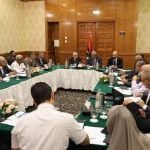
Tunisia is charting a decisive new economic course as it formally reviews its draft budget law for 2027. During a ministerial meeting chaired by Prime Minister Sarra Zaafrani Zenzri at the Kasbah Government Palace, the government laid out an ambitious financial roadmap that extends far beyond standard fiscal planning. This bill represents a transformative vision to insulate the nation from global volatility while fundamentally redefining the relationship between the state, its citizens, and the economy.
Strategic Context: Aligning with the 2026-2030 Development Plan
Far from an isolated financial exercise, the 2027 budget is firmly anchored within the implementation phase of Tunisia’s five-year development plan (2026–2030). Tunisian authorities have crafted this document as a dynamic shield against an increasingly fractured international landscape. With persistent geopolitical tensions and unpredictable market fluctuations posing existential threats to smaller economies, this budget is designed to enhance the national economy’s capacity to absorb severe external shocks. It signals a definitive shift away from reactive crisis management toward proactive structural strengthening.
A Participatory Governance Shift: The “Bottom-Up” Approach
A hallmark of this legislative effort is the radical departure from traditional top-down policymaking. The government is championing a participatory and territorial approach, which Prime Minister Zenzri emphasized as a core operational principle. The underlying rationale is to increase accountability across all levels of society. Citizens, local communities, and key economic actors are no longer passive recipients of policy but are expected to actively participate in defining and executing development strategies. This decentralization of responsibility reinforces the principle of “relying on one’s own strengths”—a cornerstone identified by the presidency to cultivate endogenous growth and reduce dependency on foreign aid and volatile capital flows.
Reconciling Fiscal Prudence with Growth Imperatives
One of the most delicate balancing acts within the future budget is the attempt to reconcile the long-term sustainability of public finances with the urgent need to stimulate economic momentum. The Tunisian government remains committed to preserving the state’s core financial equilibrium, yet it refuses to sacrifice social welfare in the process. Consequently, the law maintains a robust social safety net explicitly targeted at supporting low-income and vulnerable groups. By improving purchasing power and enhancing the quality of public services, the government aims to couple social protection with aggressive policy measures that stimulate both public and private investment, spur wealth creation, and tackle the pressing issue of unemployment.
The Four Pillars of National Security: Food, Water, Energy, and Pharmaceuticals
At the heart of the 2027 budgetary priorities lies a deep-seated commitment to reducing Tunisia’s structural vulnerabilities. The Prime Minister has elevated food, water, energy, and pharmaceutical security to the status of “components of national security and state sovereignty,” signaling a securitization of these critical sectors:
- Agricultural and Food Sovereignty: The budget calls for sustained financial backing for domestic agricultural production. Beyond immediate farm-level support, the government is prioritizing the strengthening of strategic storage capacities and supply chain infrastructure to ensure price stability and availability during crises.
- Water Security and Climate Adaptation: Faced with escalating climate pressures, severe drought cycles, and chronic water scarcity, the bill introduces measures to radically improve hydraulic resource management. This includes investment in non-conventional water sources, desalination projects, and enhanced irrigation efficiency.
- Energy Transition and Efficiency: To drastically cut Tunisia’s exposure to erratic international hydrocarbon markets, the government is accelerating investments in renewable energy projects (solar, wind, and green hydrogen). Simultaneously, a national push for energy efficiency across industries and households aims to reduce overall consumption and carbon footprints.
- Pharmaceutical Independence: The budget outlines strategies to secure the domestic pharmaceutical supply chain, reducing reliance on imports for essential medicines and ensuring uninterrupted access to life-saving drugs for the Tunisian population.
Structural Overhaul and Economic Modernization
Beyond the four security pillars, the budget bill serves as a vehicle for deep institutional reforms. A major component involves the comprehensive restructuring of public enterprises to enhance efficiency, curb fiscal drains, and improve service delivery. Complementing this is an aggressive digital transformation agenda designed to modernize public administration, streamline business processes, and foster a knowledge-based economy. Furthermore, the government is pushing for greater tax equity, aiming to broaden the fiscal base fairly, enhance revenue collection, and ensure that the tax burden is distributed justly across all economic sectors.
A Vision for Sustainable and Inclusive Prosperity
As Tunisia prepares to enact this comprehensive budget, it is clear that the 2027 bill is more than a mere financial statement—it is a holistic national project. By prioritizing strategic self-reliance, embracing participatory governance, and driving forward a green and digital transition, the Tunisian government aims to construct a resilient, equitable, and sovereign economic model capable of weathering future storms while delivering tangible improvements to the lives of its citizens.
TunisianMonitornews