The security equation in the Middle East is no longer what it used to be.
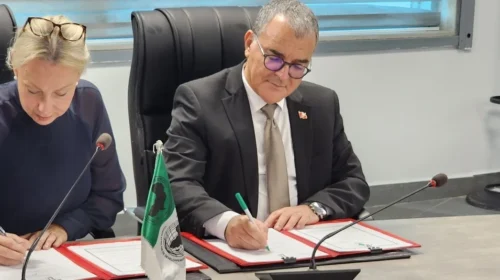
In Mecca, the meeting between Saudi Arabia, Turkey, and Pakistan was not merely a political gathering; it appeared as a declaration of a new phase in strategic thinking: a phase in which regional states no longer wait for someone to protect them but begin building their own deterrent capabilities.
Saudi Arabia, which in recent years has realized that relying on a single security umbrella carries significant risks, is now moving toward diversifying its sources of power. Hence the importance of its partnership with Pakistan and Turkey, three countries that possess different elements of strength, but when combined, they create a formula that is difficult to ignore.
Saudi Arabia holds economic weight, energy influence, geographic significance, and political standing in both the Arab and Islamic worlds. Turkey possesses military strength, an advanced defense industry, and NATO membership, while Pakistan represents a major military power and a nuclear state. This is not a single force, but three types of power converging under one deterrence umbrella.
The most important message is not necessarily directed at a specific country, but rather at anyone considering testing the security of any state within this triangle.
In the past, any attack on Saudi Arabia could be viewed as a Gulf crisis requiring international intervention. Today, however, the equation is beginning to change: any aggression could open new calculations that go beyond the borders of the targeted state.
Here, Iran stands at the forefront of those who will need to reassess the landscape. The alliance does not declare itself against Tehran, but it does raise the cost of any escalation targeting Saudi Arabia directly or through regional proxies, from Yemen to energy security and maritime routes.
As for the United States, it is not accurate to say that Riyadh has abandoned it. The matter is more sophisticated than that. Saudi Arabia is not replacing one ally with another; rather, it is building multiple security umbrellas so that its security decisions are not tied to a single capital. This is perhaps the most important point in the new transformation.
Saudi power is no longer measured solely by its arsenal but by its ability to build a network of partnerships that makes aggression against it more costly—politically and militarily.
Hence, describing the agreement as an “Islamic NATO” may be exaggerated at this stage, but describing it as the nucleus of a new regional deterrence system appears more realistic.
The real question now is not who has the greater power. But rather, who can make the use of force against them more costly?
If Riyadh, Ankara, and Islamabad succeed in transforming this political agreement into genuine defense, intelligence, and industrial cooperation, we may be witnessing one of the most significant reshaping processes of the balance of power in the Middle East in recent years.
Saudi Arabia, it seems, has begun to shorten the distance between threat and deterrence.
And from Mecca, the clearest message may be this: the security of the region will no longer be merely an umbrella coming from outside but a power built from within.
TunisianMonitorNews (By Bassam Ouda)